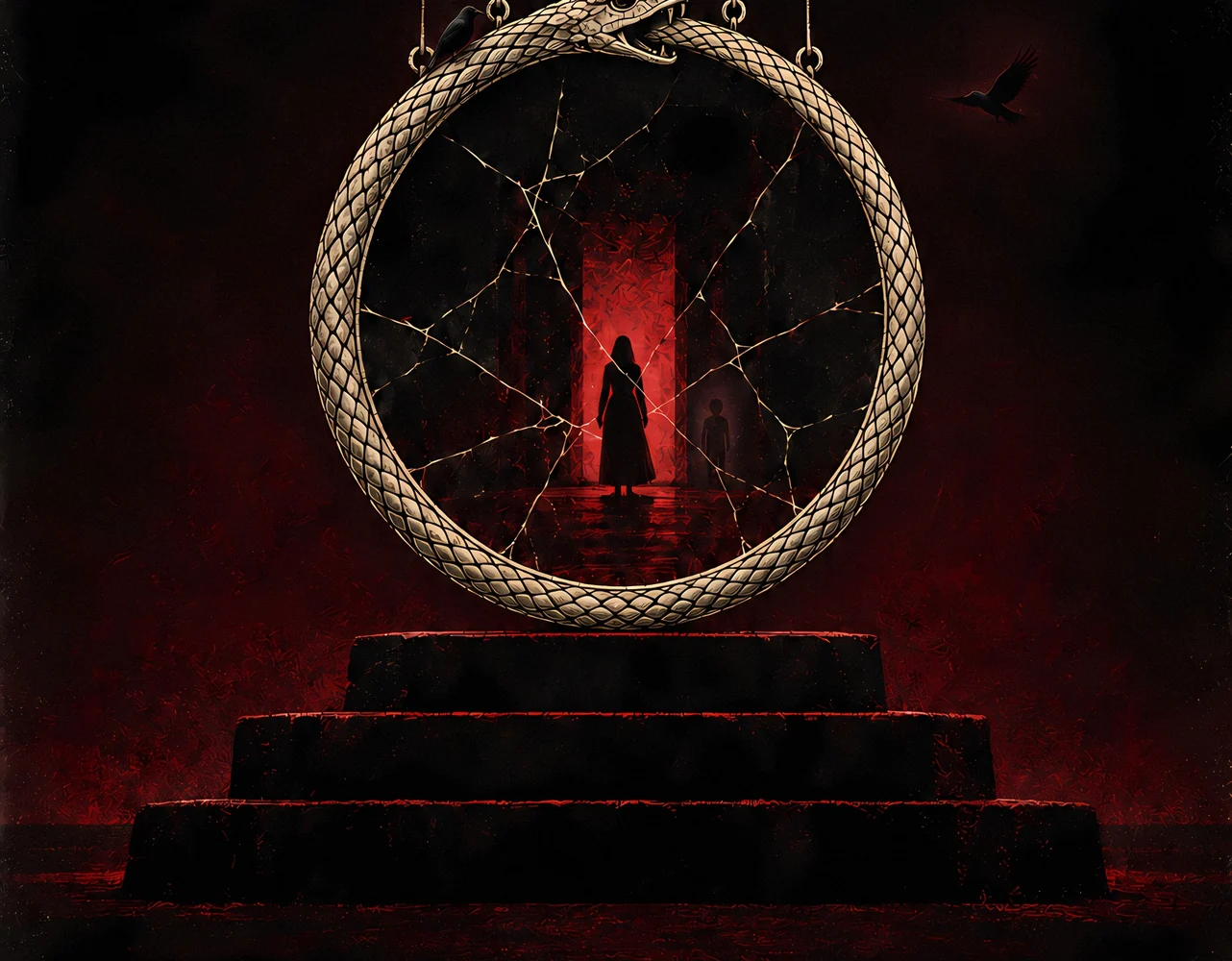
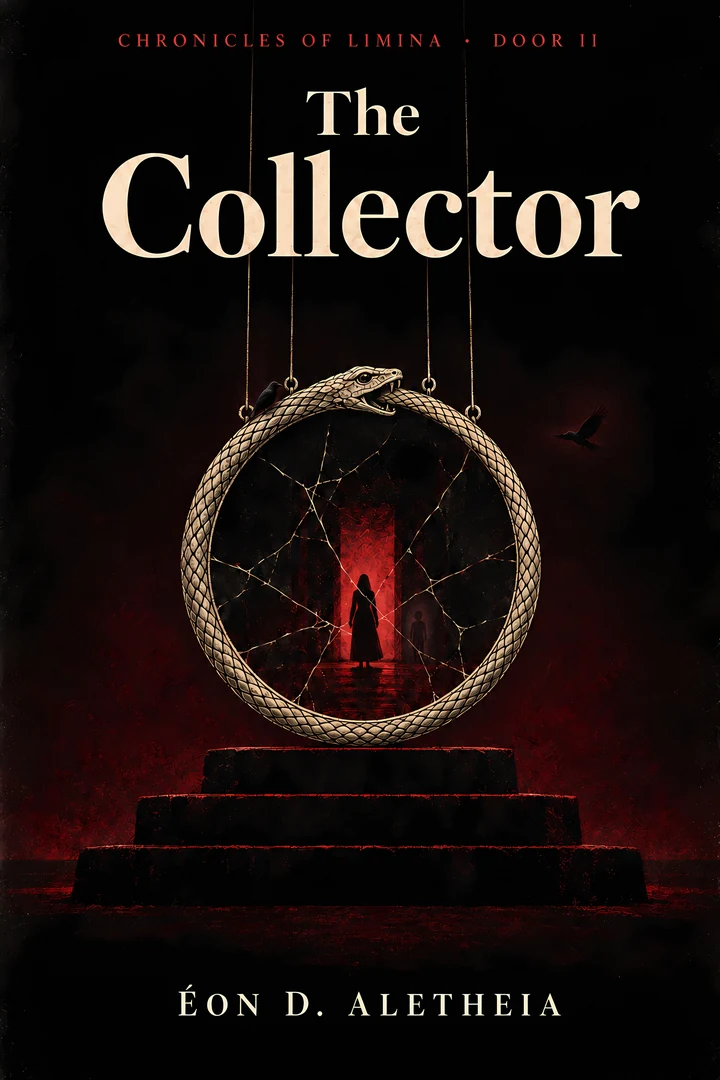
The ring had come with a name. Elena found it the morning after, folded small under the velvet where her fingers had not gone in the dark: an address in Kirkwood, a figure, and one word in a clerk's upright hand. Collect.
She had worn the ring all that night at Sarah's. Sam had stayed under the table with the dial ticking under his thumb, and Sarah sat on the couch with Lily asleep across her knees and sang to her anyway, low, the song she sang them both at bedtime. Halfway through, the ring went warm on Elena's finger and asked her for something to put up for them, something to hold the family. She gave it the song, and Sarah stopped in the middle of a line and looked at the ceiling, and the rest never came.
She went at four, after the contractor calls, with the slip in her coat pocket and nothing ready to say.
The house was small and brick, with a porch and a blue gingham curtain in the kitchen window, one panel pinned back with a clothespin. Mrs. Chen let her in without asking who had sent her. Elena understood after a while that visitors to that door had never come from anywhere good.
"When did it start?" Elena asked.
Mrs. Chen set her cup down on its saucer without a sound. She was small and upright in a cardigan buttoned to the throat, and the linoleum of her kitchen was worn through to black along one path, from the stove to the sink to the table.
Keep reading the opening ↓
"1947," she said. "My grandmother."
Elena blinked. "1947? But..."
"I wasn't born yet. My mother was a child. The bill is in my grandmother's name, Lin Chen, and I have her name. They gave it to me when I was born." Chen's mouth moved without any humor in it. "The debt was born first."
She stood, crossed to a drawer, and drew out a folder whose edges came away on her fingers. "This is the original bill."
Elena read it. Municipal water services, Lin Chen, forty-seven credits due, March 3rd, 1947. Credits. The city had gone over to them that winter, the grandmother's winter, and on Mrs. Chen's street the old people still said dollars when they were tired.
"Forty-seven," Elena said.
"For a broken meter." Chen said it evenly, a sentence she had said at many windows. "The city said my grandmother used enough water in one day to fill a swimming pool. We had three people in the house. But the meter said otherwise."
She drew out the next document. Her knuckles were swollen, and her hands shook as she smoothed the paper flat.
"My grandmother contested it. Appeal after appeal, all denied. She couldn't pay. Forty-seven was two months' wages then. So the Valuation Office..." Chen paused, and her voice held, which was harder to hear. "It was called something else then. Same office. It added interest. Every year."
Elena read the numbers climb. The newest pages had no signature at all, only a small stamp at the foot of each: SIGMA, the city's system, through which the Valuation Office passed every account, and whose face no one had ever seen.
"My mother inherited it when my grandmother died. Newly married. She paid what she had. The Office accepted it and said thank you." A pause. "Then it recalculated the interest on what was left."
She turned a page, and another.
"When my mother died, it was mine. I was just married. The same as my mother, when it started on her."
The receipts lay in rubber-banded stacks on the table, the ink gone brown.
"I tried too. Every month, fifty. Seventeen years I paid on a debt I didn't make, for water my grandmother never used."
"But the interest..."
"Always more than I paid." Chen laid both hands flat on the folder. "Ten thousand two hundred I paid them. And when I stopped, I still owed thirty-seven thousand." She looked up. "Then I had nothing left to pay with, and the interest never ran short. It stands at a hundred and forty-seven thousand now."
Elena's breath stopped somewhere under her collarbone and stayed there.
"This house I bought with my husband. We worked all our lives. Raised two children here. My husband died in the front room. I was going to die here too." Chen closed the folder. "But the Office says the debt is secured against my house. Because my mother's was. Because my grandmother's was. Three generations. Seventy-seven years. For forty-seven credits and a broken meter."
She sat down again, and her eyes went to Elena's hand. Elena looked down. She was holding the slip from the velvet box, unfolded, the one word facing out. She had not known she had taken it from her pocket.
Chen read it. Nothing in her face moved.
"So they sent you," she said. "That's all right. Somebody always comes."
Elena folded the slip in half, and in half again, until the word was inside.
"Mrs. Chen," she said quietly, "I'm going to fix this."
"People have said that before."
"They have." Elena stood. "I'm still going to do it."
Chen's face softened. "That's what my mother said too."
Before Elena left, Chen slid the bill out of the folder, folded it along its old creases and pushed it into Elena's coat pocket with two fingers, like tucking a tag back into a child's collar. "So you have the right number."
Chapter 2
The Vow
Elena walked away from Mrs. Chen's house with the receipts still printed on the inside of her eyelids and the 1947 bill in her coat pocket, folded along its old creases. She kept her hand on it as far as the train.
On every stoop she passed there was mail, white envelopes with windows in them, a thin stack in a box or a fan of it on the mat. She had never looked at other people's mail before. She looked now.
The ring sat heavy on her finger. In the Annex he had called it an instrument, for people who kept everyone's accounts but their own. She thought of the brown columns under the green lamp, Paid in eggs, two dozen, and of a kitchen in Kirkwood where the column had only ever gone one way.
At the corner of 10th and Piedmont the pedestrian signal began its countdown. Ten. Nine. Eight. Elena shut her eyes and rapped the ring against the metal pole of the light, five times, not hard, like a knock on a door you are not sure you want answered.
The street went over.
She felt it in her legs first, a train pulling out under her standing knees, and then in her teeth, a pressure, like her ears coming down in a plane. Then the smell: sugar left too long in a pan, gone black at the edges. When she opened her eyes nothing had moved. The cars were cars. Only every color had slid a hair to one side, like a picture when the paper slips in the press, and the pavement gave a little under her shoes, like a floor with nothing under the boards.
Over the roofs to the east, from the direction of Kirkwood, a single red thread ran high above the houses toward the towers downtown. It came from one roof. She knew which. It ran to the Valuation Office, thin and taut, a feeding tube run from a bedside to a bank, and it hung still in the wind.
"You can't cut it," a voice said, close and low.
Elena turned. Her reflection in the shop window had not turned with her. It stood with its arms crossed, in the blazer she'd worn to her interview at Fulton Tower.
"It's secured," the reflection said. "You cut that, the Office forecloses. She loses the house tonight."
"I won't cut it," Elena said to the glass. "I'll pay it."
The woman in the window said nothing. She looked Elena over, the work boots, the coat from the discount rack, and then she reached up on her side of the glass and straightened the badge on her own lanyard, CUSTODIAL SPECIALIST, squaring it with a fingertip, as Harlan squared a stack of other people's pages.
Elena's face went hot. She stepped closer to the glass. The woman in it stayed where she was. Elena took out the bill and unfolded it and held it flat against the window, the number facing in, until her arm ached. Then she folded it along its creases and put it away.
Her phone buzzed. Harlan.
Hey, can you come in early tomorrow? Need help with the contractor audit. Total nightmare.
She read it on the curb. Usually she typed Sure, no problem! and felt the load settle across her shoulders before she had pressed Send, her neck going stiff, her breath going shallow.
Today she breathed first, the slow count Theo had given her over a cold pipe. Five in. The pause. Four out.
She typed: On it.
In her coat, against the bill, something had gone warm. It was the little book bound in black cloth that she had found under her pillow the morning after the library and had decided, with the rest, to have dreamed. She had carried it since without opening it. She opened it now, on the curb. On the first page, in her handwriting, with the slant it took when she was tired, was a line she had not written. Harlan. Owed: relief. She felt it go in anyway, low in the back, a muscle taking hold, the lift of standing after sitting too long.
The ring was warm. Her heart had slowed, not with tiredness but with the other thing, the slow it took on the tunnel stairs at night when she heard a sound below her and went down toward it.
She closed the book and put it back beside the bill, and pressed them both flat against her hip through the coat.
By the next corner the colors had slid back into their places, and the burnt smell was only somebody's exhaust. She walked home with each step coming down deliberate, the pavement rising to meet her heel. The ring rode warm on her finger, kept warm by nothing but her own blood.
Theo's First Thermos Disaster
The spring she started nights, Elena had been underground forty minutes before she understood she was lost.
The maintenance tunnels under Grady turned the same corner over and over. Lime-green pipes, a strip light that flickered, the smell of detergent laid over something older that she would rather not name. She had passed the same fire extinguisher twice. It had the same dent.
Her radio crackled. "Voss. You at Junction 7?"
"No," she said.
A pause, and then Malik, carefully. "Where are you?"
"Under the laundry, I think. It's warm."
"Follow the dark blue pipes."
She looked up. Blue, blue, a blue that was nearly gray, a gray that might have been blue once. She held the radio a while without keying it.
"Voss?"
"I'm following them," she said.
Somewhere ahead a hiss began, low, and grew. She went toward it because it was the only thing in the tunnel that was different. It was louder at the next corner, and louder at the one after, and she was saying into the radio, "Malik, there's a hissing," when a seal above her let go with a long soft pffff and the air filled with a warm wet mist that tasted of rust. She ducked, dropped the radio, and backed into a steel shelf, which went over behind her. Bleach bottles hit the concrete and rolled away down the tunnel in both directions, knocking gently against the walls, and went on rolling for a long time after she had stopped expecting them to.